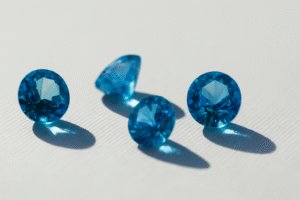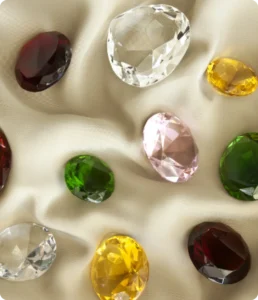
Gemstones have fascinated humanity for thousands of years. From royal crowns to modern fine jewelry, natural gems represent beauty, rarity, and lasting value. However, for first-time buyers and even experienced collectors, understanding gemstones can feel overwhelming.
This guide is designed to help you understand the fundamentals of gemstones, so you can make informed, confident decisions when purchasing natural gems.
What Is a Natural Gemstone?
A natural gemstone is a mineral (or occasionally organic material) formed naturally within the Earth over millions of years, without human intervention. These stones are cut and polished to enhance their beauty but are not man-made.
Common natural gemstones include:
- Sapphire
- Ruby
- Emerald
- Tourmaline
- Garnet
- Alexandrite
Natural gems are valued for their rarity, durability, and unique characteristics—no two stones are exactly alike.
The 4 Key Factors of Gemstone Quality
When evaluating any gemstone, professionals rely on four essential factors:
1. Color
Color is the most important factor for most gemstones.
Key aspects include:
- Hue – the basic color (blue, red, green, etc.)
- Tone – how light or dark the color appears
- Saturation – the intensity or purity of the color
For example:
- Pigeon Blood ruby is prized for its vivid red saturation
- Cornflower Blue sapphire is known for its soft yet rich blue tone
2. Clarity
Clarity refers to internal inclusions or surface blemishes.
- Most natural gemstones contain inclusions
- Some inclusions prove natural origin
- Eye-clean stones are generally more valuable
💡 Tip: In emeralds, minor inclusions are accepted and expected.
3. Cut
The cut determines how well a gemstone reflects light and shows brilliance.
Popular cuts include:
- Oval
- Cushion
- Emerald Cut
- Pear
- Round
- Cabochon (common for star sapphires)
A well-cut stone enhances beauty regardless of size.
4. Carat Weight
Carat measures the weight, not size.
- Larger stones increase exponentially in value
- A well-colored smaller stone can be more valuable than a larger dull one
Gemstone Treatments Explained
Many gemstones undergo treatments to improve appearance. These are industry-standard but should always be disclosed.
Common treatments:
- Heated – improves color and clarity (common in sapphires)
- Unheated – rare and highly valuable
- Oil-treated – common for emeralds
- No Treatment – extremely rare and premium
At Akira Gems, transparency is key—we clearly state all treatments.
Why Gemstone Origin Matters
Origin can significantly impact a gemstone’s value and desirability.
Examples:
- Sri Lanka (Ceylon): Sapphire, Padparadscha
- Myanmar (Burma): Ruby
- Colombia: Emerald
- Madagascar: Sapphire, Garnet
Certain origins are historically associated with superior quality and rarity.
Understanding Gemstone Certification
Certification provides independent verification of a gemstone’s authenticity and characteristics.
Trusted gem laboratories include:
- GIA (Gemological Institute of America)
- GRS (GemResearch Swisslab)
- IGI
- National Gem Laboratories
Certificates typically confirm:
- Natural origin
- Treatment status
- Color and clarity details
💎 Always request certification for high-value gemstones.
How to Choose the Right Gemstone for You
When buying a gemstone, consider:
- Purpose (investment, jewelry, astrology, collection)
- Budget vs rarity
- Daily wear durability
- Personal color preference
There is no “best” gemstone—only the right gemstone for you.
Final Thoughts
Buying gemstones is both an art and a science. With proper knowledge, you can appreciate not only the beauty but also the story, rarity, and value behind each stone.
At Akira Gems, we believe an educated buyer is a confident buyer. Our mission is to provide authentic, ethically sourced gemstones with complete transparency and expert guidance.